
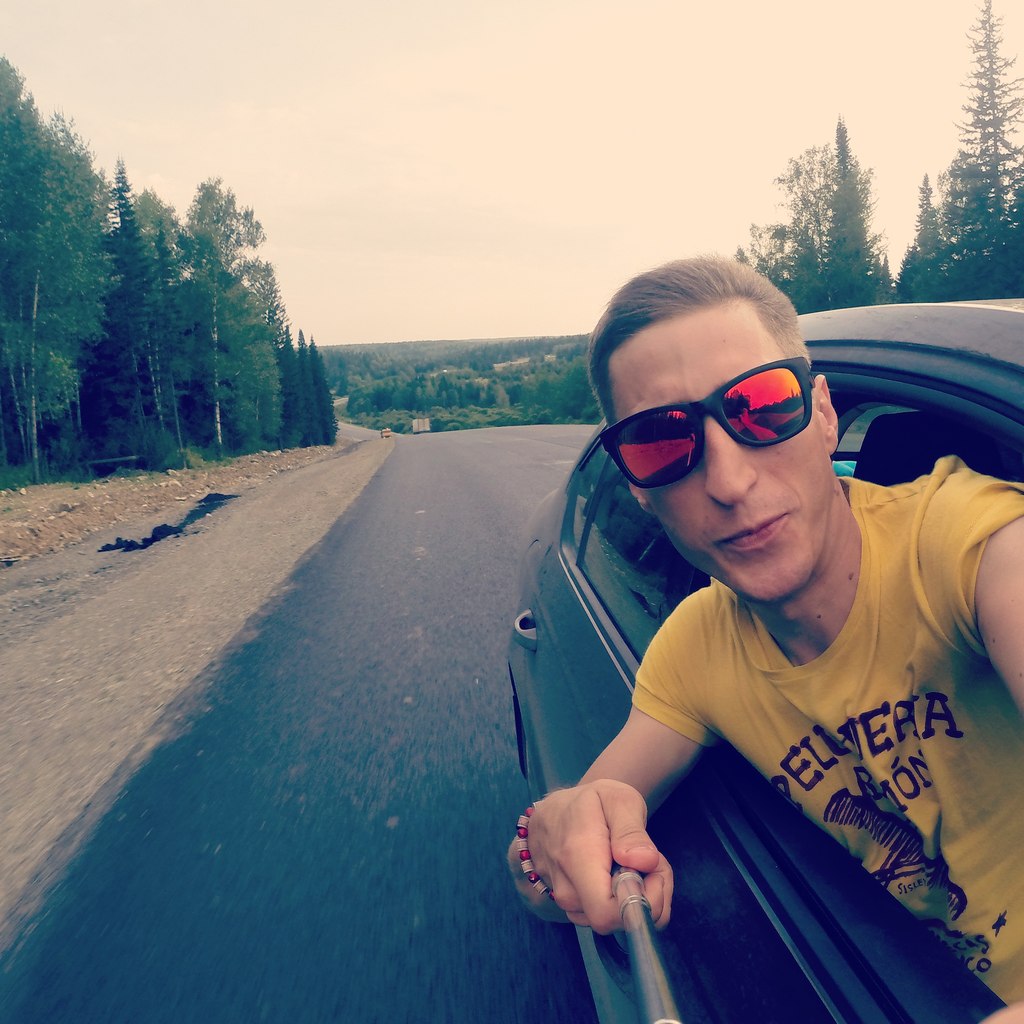
A rainy Siberian hello! 4,000 km and 5 days on the road are behind us. Nizhny Novgorod – Kazan – Naberezhnye Chelny -Ufa -Omsk – Novosibirsk – Krasnoyarsk. Three nights in hostels, one in a tent on the bank of the Kama River, and one sleepless night behind the wheel. Mobile internet leaves much to be desired and is only good enough for plotting the trip tracker (available here).
About hostels
It's strange that I'd never stayed in this kind of place before. It's fun here and quite cozy. You get the feeling you're always welcome. Not expensive at all (350–500 rubles per night). As a rule, they're located right in the city center, within walking distance of the main sights. And the people here are unusual. Mostly young folks, travelers just like you. Yesterday, for example, I met a young scientist named Rodos Blonsky, who is actively developing his healthy-eating project – the food of the future, newest harvest, building cities of the future based on Jacques Fresco's designs and much more (www.ideashomeholding.ru). Hostels really grew on me.
About the roads
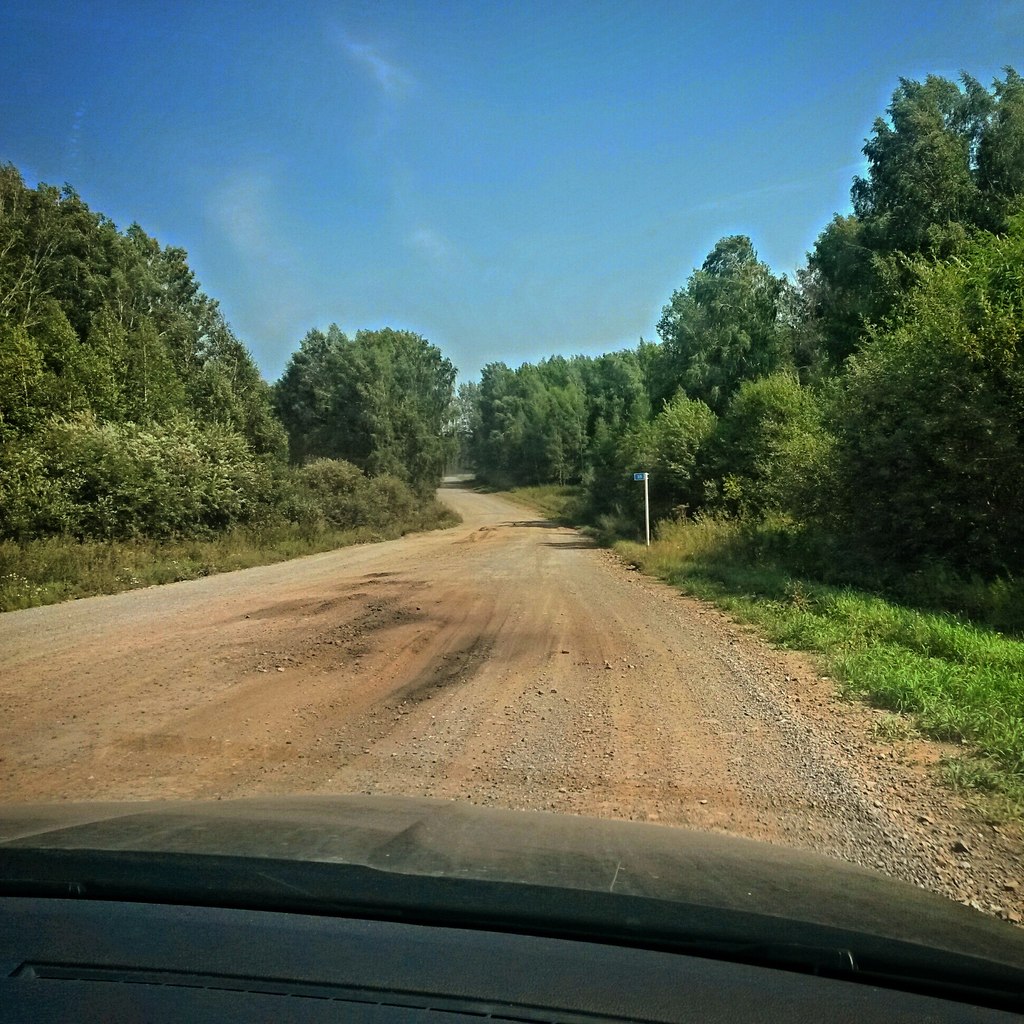
Let me dispel the myth that there are no roads in Russia. Out of several thousand kilometers of road from Yaroslavl to Krasnoyarsk, only about 50 kilometers in total were rough going, where we had to crawl along in low gear at 20 km/h. For the most part, the “Volga”, “Ural” and “Baikal” highways are quite decent. In Omsk Oblast and the Republic of Tatarstan you can comfortably cruise at 140 km/h. We stick to 110 km/h because of the cameras. Only one fine so far on the whole trip. On the approach to Ufa there was a “setup” with a tripod camera at the entrance to a town. Only non-local cars get pulled over. In Novosibirsk you start noticing that 50% of the cars are right-hand drive.
About the adventures
On the approach to Novosibirsk, two cars with European plates are parked along the highway, and their drivers are gesturing wildly, asking us to stop. We lock the doors and pull over. Two guys of Yugoslav origin can't hide their joy and, in broken, heavily accented Russian, say: “Hello! Sorry to bother you, but we have a problem – we're out of gas. ” I reply that we have a jerry can with us and can share. “- Bro, ours is diesel” – with these words one of them slips a ring off his hand and pushes it through my window. “- Take it, bro, it's a gift for you”.
His partner meanwhile pulls out his wallet and shows me a credit card and Yugoslav banknotes: "Bro, we need Russian currency, they won't accept our credit card at the gas station, or our Yugoslav money either. There's a hungry kid sitting in the car. We need Russian rubles." I start suspecting something's off. I roll up the window and we discuss what's happening with our companions. We conclude it's a scam and we're not giving any money. At that moment they try to open the door and very insistently repeat that they're trapped and desperately need our help. I hand them a bunch of bananas to feed the kid and give back the ring. The Yugoslavs double down and start saying openly – give us 1,000 rubles. Take the ring as a gift. Later we Googled it and found it's a popular roadside scam. We didn't fall for it. But I'm sure many people hand over money. The ring, of course, is fake.
Assorted facts
On the approach to Chelyabinsk we asked the navigator to take us to the meteorite crash site, where one fell a couple of years ago. Surprisingly, not many residents of the city even know there was a meteorite.
There's an Eiffel Tower in the center of Krasnoyarsk.